It has been a little more than a month since we lost a wonderful shepherd in our area.
Reality seems to have set in … so it is a good time to ask, have we already lost the sound of his voice… have forgotten the mission that he lived and worked for. Have we lost the beautiful spirit that drew us to him… the Christ-like spirit.
Today, may we the right time to talk to Jesus and give him permission to do the work that will help you bear fruit for the mission… his mission Ask him to guide throughout the day, weeks and months ahead. Let him show you a wound that needs his healing touch, and allow him to touch it.
Pope Francis’ special intention for the month of October is: Holy Spirit, Help your Church to sustain a loving, listening (synodal) lifestyle in every way. May we promote the participation, communion, and mission shared by clergy, religious, and the laity.
In the spirit of his intention, this is my prayer: Lord, I lift up all the faithful in our area! I am asking you to move in our hearts, break down the walls that have been built up, And soften our hearts so we can hear you clearly. Lord, break every chain, set us free from pride, envy, jealousy, help us surrender, to give you permission to be Lord of our lives as children of God.
Lord, please send us shepherds, Shepherds that we will listen to, and who know you, and love you. Who will not give up on us.
Glory be to you, Father, Son and Holy Spirit. Amen
This morning, I wake up to some news articles that remind me to focus on the Peace of Christ and not the chaos of the world. – recent bot campaign, shows AI easily accessible. – National Security agencies should explain how they are using AI. – cyber attacks in an attempt to sow discord – AI generated content shows celebrity’s backing candidates is false
All these seem pretty normal in the past few years with the rise of AI and our reliance for online content … it seems that we spend most of our brain power trying to navigate truth, plausible and false. we have lost the sense of right and wrong and moved to just being more right or less wrong that someone else or status quo.
It was this article that caught that caught my eye because it summed up the thread of conversations and emails and messages that I have been navigating for many years now.
“Scams, conspiracies, and surprising theories, why do we fall victim to them”
After a quick read there were some points – We have a natural sense to trust people. – Most online content has been structure to generate income or create an outcome that will move people to act or react. – People reach for something that makes them feel good about what their life is, and who they are, and what they desire. The online world is just too easy in so many ways, that we have become accepting and trusting that if it is made public it must be truthful. In the not to distance past Print, Radio and Television were the main methods of mass communication of ideas and held and still held to a set of standards that someone is accountable to ensure they are fact checked.
Online content from social media and video sharing platforms is not regulated, falls under the notion of the Wild West, or Buyer Beware … reminds me of the signs that we see at some swimming areas. “The area is unsupervise – Use at own risk”
To combat this … I aim to avoid using what I see or sent by others as a means of decision making … there is just too many ways to manipulate visuals and audio today.
In addition, this same monetization mindset has crept into the Catholic mainstream as well, where we have “Catholic” influencer generating content for likes and views, selling books and other wares that do not promote the Faith or inspire Peace but confusion and division. They make you feel uneasy, fearful and live as though you are not doing enough or missing out.
Many faithful as read these new best selling authors and not looking to the Church Fathers or Magisterium to validate or confirm the narratives that are spending time reading.
If you are reading or viewing this material without consulting the Bible, catechism or the writings of the Church Fathers, you make be walking a journey of faith beside a wolf in sheep’s clothing.
Back in 2020, on August 10th, the Archbishop placed the Book of the Gospels in my hands, and prayed these words… “Receive the Gospel of Christ, whose herald you now are. Believe what you read, teach what you believe, and practice what you teach.”
At each Mass, I hold the Book of the Gospels in procession and place it on the altar. Then after a blessing I pick it up again, but this time I notice the weight of the responsibility … I have been called to give voice to the words of Christ, to share the stories of those he impacted 2,000 years ago in his public ministry. I have also been called to carry the Gospel of Christ outside the ‘safe’ walls of the church buildings to each and every person that God’s places in my daily path. Each and every person has their story of redemption & salvation written in the Book of the Gospels. Today I ask the Holy Spirit to allow me the grace to continue to live out this prayer and allow other to see their story in Christ through me.
Every journey starts with deciding to move forward… then continues with the first step.
Here are some focus points from my first step… – The deacon serves the poor through the many ways found in the corporal and spiritual works of mercy, he serves them foremost as a spiritual man bearing spiritual gifts. – The last thing a deacon wants is for his ministry to become a skill and his presence to other to become routine. – A deacon’s ministry is to live out Christ’s invitation to receive the love and intimacy willed by God for all his creatures. – Deacon’s are called to accompany people to the very depths of their souls and encourage them to receive the presence of God over and over again.
Each time a deacon put on his stole, may it remind him of the generosity of God, as he calls him to share in his Son’s service.
August seems to be the month where we naturally begin to look forward, the days are not quite as long and the nights are getting cooler. We start to see fall registrations for sports and classes and the Back to school advertisements start to appear. We start to shift from the lazy days of summer to the structures and routines of fall. In the Church we have shifted to John’s Gospel, which focuses on Jesus’ Eucharistic discourse, and with in the Sunday Gospels. With the anniversary of my diaconate ordination in the month of August, in the past few years it seems that I take this month as a personal reflection month, in which I focus my personal reading and prayer on the ongoing formation, ministry and life of the Permanent Deacon.
For the next little while … I step back, or maybe it is step into, actually let’s go with step aside… because life is still forward, I cannot go into ‘Monk Mode’. I still have to be present to my family, my job, my Parish, and my ministry. So I will journey with myself and two of the books that I impacted me at the beginning of my diaconate journey. A Deacon’s Retreat by Deacon James Keating A New Friendship by Edward L. Buelt
During this time, if I may… I ask that you pray for me and all of my brother deacons, that the Holy Spirit may guide us in our home life, employment and in our ministry to God’s people. That we may have understanding of others and compassion for all. To help us know the gifts that we have been given and to show us how to use them in serving others. Bless us with the humility needed to accept rejection, and the ability to discern God’s will, and the peace of mind that comes with serving Him. This prayer also extends to the men in the deaconate formation and those being called, their wives and families, the Pope, our Bishops, Priests, religious, parish communities, and all peoples. May we serve each other in love, and understanding. Give us the courage, strength and grace to help build a world of justice and peace through Jesus Christ, the Living Bread from Heaven. Amen.
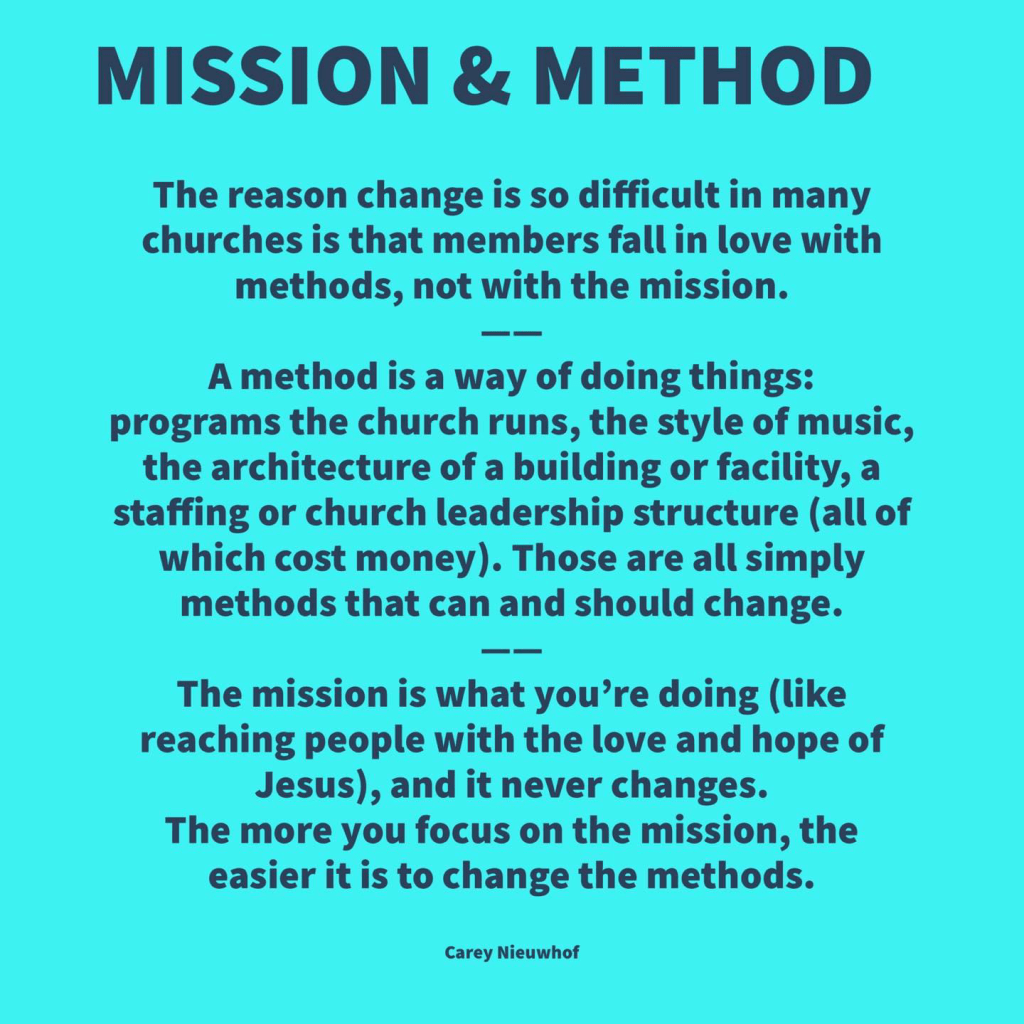
Over the last few years, I have come to appreciate the cycle of readings and the flow of the church year. It seems that the weeks after Corpus Christie, up to this past Sunday where we began the John 6 eucharistic discourse…we have been focused on the mission of the church. That leads me to three questions… 1) What is the mission of the Church? 2) What is the mission of my parish? 3) How am I living out this message in my life?
I can across this quote.. it summarizes a lot of what is happening today, as we navigate our history, the present times as well as what is to come.
What is the difference between a permanent deacon and a transitional deacon?
What does a deacon actually do?
How do I address a Deacon?
So if you’ve ever wondered the above — or weren’t even aware there’s such a thing as a permanent deacon or a transitional deacon — you’re not alone. Here is an explainer on the diaconate, a crucial but often overlooked facet of the Catholic Sacrament of Holy Orders.
First, an important distinction: What’s the difference between a transitional and permanent deacon?
Like many things in the Church, this is a question with both a simple answer and a more nuanced answer.
The simple answer: a transitional deacon is a man who’s on his way to be ordained to the priesthood. As a seminarian, he typically is ordained a deacon a year prior to being ordained to the priesthood.
Permanent deacons often have secular jobs and are allowed to be married.
By contrast, a permanent deacon is a man who is not being formed for the priesthood but to be ordained a deacon permanently. Married men may become permanent deacons and have families; they often work in a secular job in addition to their diaconal role.
But it raises another question with a more nuanced answer.
Why even have transitional deacons?
What’s the point?
If a man is making his way toward the priesthood, why must he be ordained a deacon first?
To answer this, we have to understand a little bit about the sacrament of Holy Orders, which has three degrees (think kind of like ranks in the army or titles at your place of business): the diaconate, the priesthood, and the episcopacy.
Although each degree’s role and function has developed over time, all three have been present since the earliest days of the Church.
Bishops have been tasked with sanctifying, governing and teaching; they’re considered to have the “fullness” of holy orders. The priests participate in the bishops’ ministry of ruling and teaching and sanctifying. Both bishops and priests serve in persona Christi capitis, or in the person of Christ, the head.
Deacons, on the other hand, participate in their local bishop’s ministry, but they don’t serve as Christ the head. They serve in persona Christi servi, which means Christ the servant.
During the Second Vatican Council, the Church Council Fathers recognized the need for new ways to proclaim Christ to the world. As the Church continued to develop new strategies, there was something missing, what St. John Paul II called the Church’s service “sacramentalized.”
A deacon’s ministry can be summed up in three dimensions: Servant of the Word, Servant of the Eucharistic Mystery, and Servant of the Charity of Christ.
That is essentially the role of the diaconate.
Pope Paul VI in 1967 reestablished the order of the diaconate as a permanent rank, precisely because there was this indelible character — a mark of service that the Church herself founded on Christ and by Christ is the servant in all that she does.
This is played out even as a man continues to work toward being ordained a priest or, for a few, when he is ordained a bishop.
The bishop will wear a dalmatic – the vestment a deacon wears – underneath his chasuble.
Once a man is ordained a deacon, he always will be a deacon.
OK, so what does a deacon actually do?
The Church defines three main areas of service for the diaconate: ministry of the word, ministry of the liturgy, and ministry of charity.
Ministry of the Word: As Catholics, we believe that Christ Himself is the word of God and comes forth to proclaim the good news. The deacon is the herald of the Gospel, and you can see it at most Sunday Masses: the deacon is the one who proclaims the Gospel.
But it’s not just at Mass that deacons share the good news. A deacon is meant to proclaim the Gospel in every area of his life. All Christians are called to do the same, but deacons do it as part of the sacrament of holy orders.
“This is the sacrifice that’s being offered by the high priest, Christ himself, in the person of the priest, but it is also the ultimate act of service to the Father, and we see this sacramentalized in the person of the deacon.” — Deacon Eric Cooley, Associate Director, Saint Paul Seminary Institute for Diaconate Formation
Ministry of the liturgy: Besides reading the Gospel, a deacon’s assistance at Mass is perhaps the most visible sign of his ministry you’re used to seeing on a regular basis.
But permanent deacons also can baptize, witness marriages and preside at funeral services. In the United States, deacons often conduct word-and-communion services for the homebound or elderly.
“One of my favorite aspects of this is at the end of the Eucharistic Prayer where we have the doxology,” said Deacon Eric Cooley, associate director of The Saint Paul Seminary Institute for Diaconate Formation. “If there’s a deacon at Mass, he holds the chalice while the priest holds the host, as he says the doxology. And this is a beautiful example of how, yes, this is the service, or this is the sacrifice that’s being offered by the high priest, Christ himself, in the person of the priest, but it is also the ultimate act of service to the Father, and we see this sacramentalized in the person of the deacon.”
Ministry of charity: The Eucharist is the source and summit of our faith, but we’re not meant to stay inside the walls of the Church 24/7. The deacon says at the end of the liturgy to “go forth, the Mass has ended.”
Deacons go forth as a servant of Christ to bring charity to the world, each in his own unique way.
Some take part in prison ministry. Others visit the sick in hospitals. Others do different pastoral works within the community of the parish to which they’re assigned.
“This is why you see the deacon as the one that leads the Universal Prayer, gives the intercessions,” Cooley says. “He’s the one that says, ‘These are the needs of the community. Let’s bring them to the Lord.’ And so we see … this ministry of service through these three different ways.”
When greeting Catholic clergy or a member of a religious order, it’s not always apparent how to address them. Depending on the rank of the individual, there are specific forms of address that have been handed down over the centuries.
How do I address a Deacon?
In the Roman Catholic Church, there are two types of deacons: permanent deacons and transitional deacons. Here’s how to address them:
Permanent Deacons:
Formal Address in Writing: Use “Deacon” followed by their full name (e.g., “Deacon John Smith”).
Conversation: Simply address them as “Deacon” followed by their last name (e.g., “Deacon Smith”).
Transitional Deacons (those on their way to becoming priests):
Formal Address in Writing: Use “the Reverend Mr.” followed by their full name (e.g., “the Reverend Mr. James Brown”).
Remember that the use of “the Reverend + Mr.” is less common in Canada & the United States. So, whether permanent or transitional, addressing them as “Deacon” followed by their last name is a respectful and appropriate choice. 😊
These forms of address are not intended to puff up Catholic clergy members, but are ways to express respect and honor to a person who has been given a particular role in the Church’s mission. It is a way to show good manners in a world that has generally neglected any sense of public decorum.
At the same time, we shouldn’t be overly stressed out about addressing priests or bishops by their formal titles in all situations. There is a story of a young man at confirmation who accidentally called the bishop, “Father.” Instead of rebuking him, the bishop said to the boy, “Don’t worry, that’s the best title I have ever had.”
I stumbled upon this online … there is a lot of truth in these words… DG
That a priest isn’t married, nor will he have a family of his own. No wife, no children. His family is his parishioners. He is a spiritual father in faith to the community he serves. His future is in celebrating the Eucharist at mass every day, listening to confessions, anointing the sick, serving those who come to him for help.
A priest may serve a parish only for a minimum of five to seven years. After that he may be transferred to another parish or assigned a different role in the Church. He relies on his team of volunteers, staff and the lay faithful. Don’t expect him to be there all the time for you.
When you give money to the Church, you may be surprised to know that the money isn’t for him because no priest earns a fixed salary. They receive a stipend to meet their basic expenses of food, clothing and travel. They save every penny to go for a vacation and much of the money is gifted by friends, relatives and well wishers as they don’t get paid leave like the rest of us who work. While we work for a fixed amount of hours with two days off a week , priests are expected to be on stand by 24/7. So don’t be angry if they don’t respond to you when you need them. They are humans as well with the same frailty as us.
If you hear anyone speaking badly about a particular priest, please correct that person and don’t engage in idle gossip without knowing the facts. Remember that they are alone and at times would need company. Pay attention to their emotional, physical and mental needs. Accompany them if needed or offer a helping hand or even a lift.
It’s not easy to go out alone at 2 or 3 in the morning especially in dangerous neighborhoods for counseling or even anointing someone on their death bed. If someone comes to them at such an hour for help, they have to get up from their deep sleep and still be expected to celebrate Mass in the morning. Who is there for them when they are ill or have emergencies in the middle of the night? Yet they are required to perform their duties because if not them, who?
Remember their birthdays, ordination anniversaries and important events in their lives. Celebrate with them, cry with them. Offer a shoulder to lean on. If they fall, don’t judge or criticize. Lift them up and help them on their journey in life. Don’t be offended if they don’t live up to your expectations. No priest is perfect.
So take care of your priests, remember the ones who baptized, confirmed, married and anointed you. The ones who offer masses for your intentions and pray for you. May God bless our priests in Jesus name, our eternal High Priest. Amen.
A while back I set my homepage in my browser to the website Aleteia, this was to avoid being drawn down the mindless rabbit holes of clickbait and the rumor mills. This morning the headline that jumped out at me was: Pope: We were made to look in each other’s eyes, not at cell phones
What a great realization: I makes me think of the word ‘reconciliation’ … which seems like a word that we have forgotten its meaning and importance. I read the latin breakdown of the word ‘reconciliation’ Follow me on this: “Re” – implies ‘again’ “con” – implies ‘together’ “cilia” – is the word for ‘eyelash’ “tion” – implies ‘action’ Knowing this we can put together this statement that gives us the first step of reconciliation … The action of bringing your eyelash together again with another’s eyelash. To do this it means that you will need to come down to meet that person face to face. kind of gives another meaning the taking on the posture of Christ.
Back in 2007 as my refocus on my faith life was just starting, I was introduce to ‘the WORD among us’ monthly magazine that provides daily mediations and article for Catholics. I have kept up a yearly subscription most years since then and find that they have easy to navigate reflections that fit well with the everyday living that we all are faced with.
May seems to be the month of the year that we are focused on discipleship, and the theme for this month is “Come, Follow Me … Walking the Narrow Path of Discipleship” .
Today’s Gospel reading is from John 15:18-21, “If the world hates you, realize they hated me first… and we are asked the question in the reflection, “How can we imitate Jesus in returning hatred with love?
Through prayer … ask the Holy Spirit to soften your heart so that you can love them with the love of your Saviour. “Holy Spirit, give me the grace to love even those who hate me.”